In Conversation with ANTI Founders Antonia Benecke and Yoel Sartras
On architecture, shared rituals and building a new culture of social wellness in Berlin.
Name:
ANTI
Architecture:
Arno Brandlhuber
Interior & Space Design:
Yoel Sartras
Photography:
Oliver Freiländer,
Diana Dingi,
Clemens Poloczek,
Set within Arno Brandlhuber’s exposed-concrete building on Brunnenstraße in Berlin-Mitte, ANTI brings movement, recovery and community together under one roof. Founded by Antonia Benecke, Yoel Sartras and Rafael Frenk, the space combines a red light movement studio, a communal spa and areas designed for people to gather and connect. Shaped by Sartras’ architectural and creative direction, its raw concrete interiors provide a setting for a different approach to wellness, one that places social connection alongside physical wellbeing. In this conversation, Benecke and Sartras reflect on the vision behind ANTI, the role of architecture in shaping the experience and how shared rituals are creating new ways of coming together in Berlin.
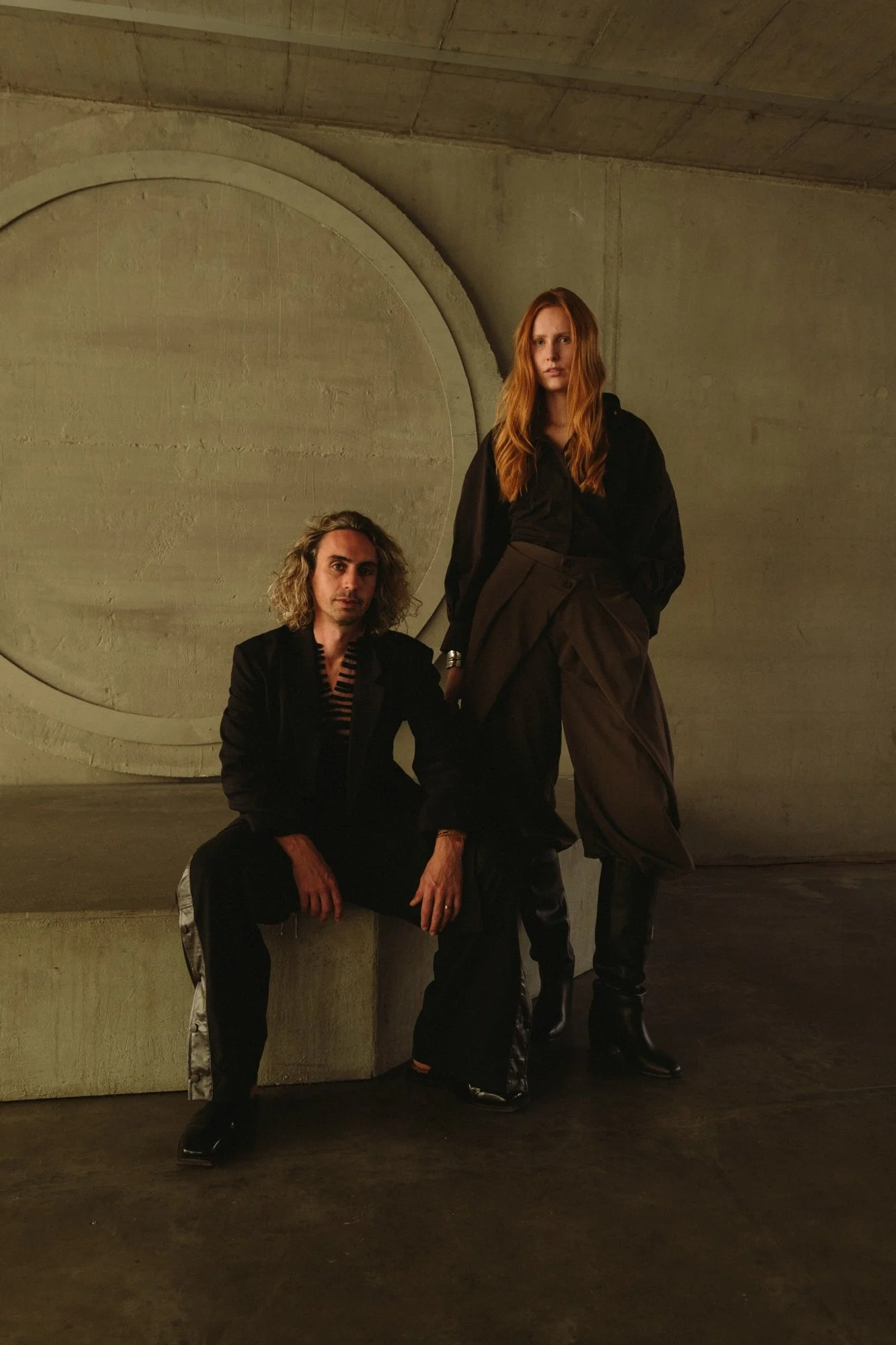
ANTI has three co-founders: Antonia Benecke, Yoel Sartras and Rafael Frenk. What brought them together, and how did their shared vision take shape?
Antonia Benecke, Yoel Sartras and Rafael Frenk share entrepreneurial backgrounds and a passion for creating what they believe in. ANTI evolved organically from their different personalities, strengths and shared commitment to healthy living and community, with Benecke and Sartras leading the company.
Their vision took shape through the space itself and the people it attracted. Each brought a distinct perspective, allowing the concept to develop through an ongoing exchange between the founders and the community around them. Today, ANTI channels that spirit into a movement rooted in social wellness, exploring how movement, recovery and social life can become part of the same daily rhythm.
ANTI describes itself as a social wellness space built around recovery, resilience and connection. What was missing in Berlin that led to its creation?
Berlin is loud, intense and endlessly stimulating. In the heart of Mitte, ANTI feels like another world: a place to exhale, arrive and belong.
The community helped reveal what was missing: a place where slowing down could be a shared experience. Somewhere to retreat and still feel connected, to recover together and find space to heal. ANTI grew around that need, making room for a softer way of being together, right in the middle of it all.
Where does the name ANTI come from, and how does it inform the way the space works?
ANTI started as a position. Against noise, speed and the constant performance of being fine. The more interesting part is the inversion: anti-stiffness is mobility; anti-stress is a nervous system that finally settles. The name sets out the resistance. The space gives the alternative a physical form. The antidote.
ANTI is housed in Arno Brandlhuber’s Brunnenstraße 9, a building cast in exposed concrete. How did the building shape the way the space was planned?
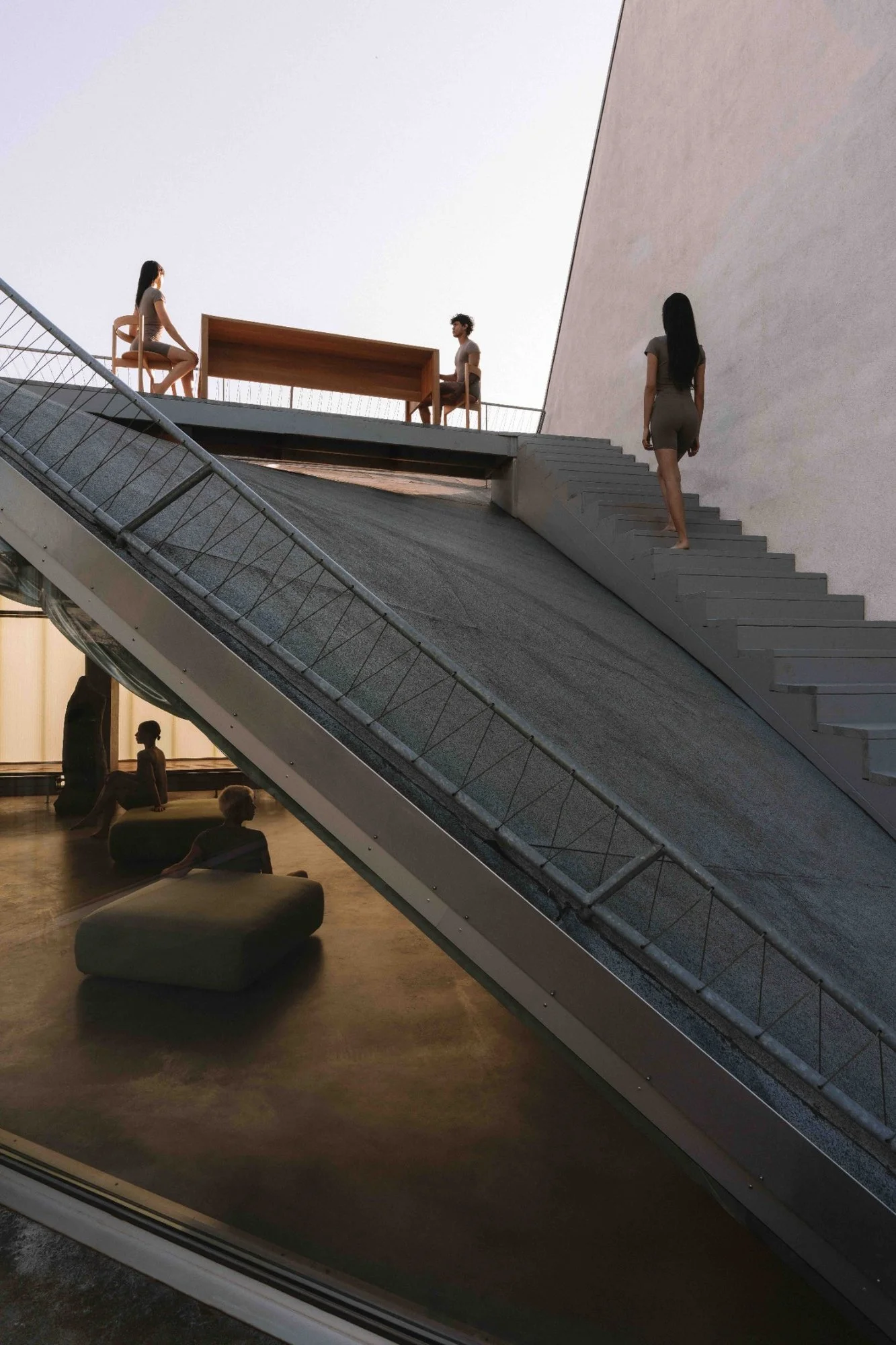
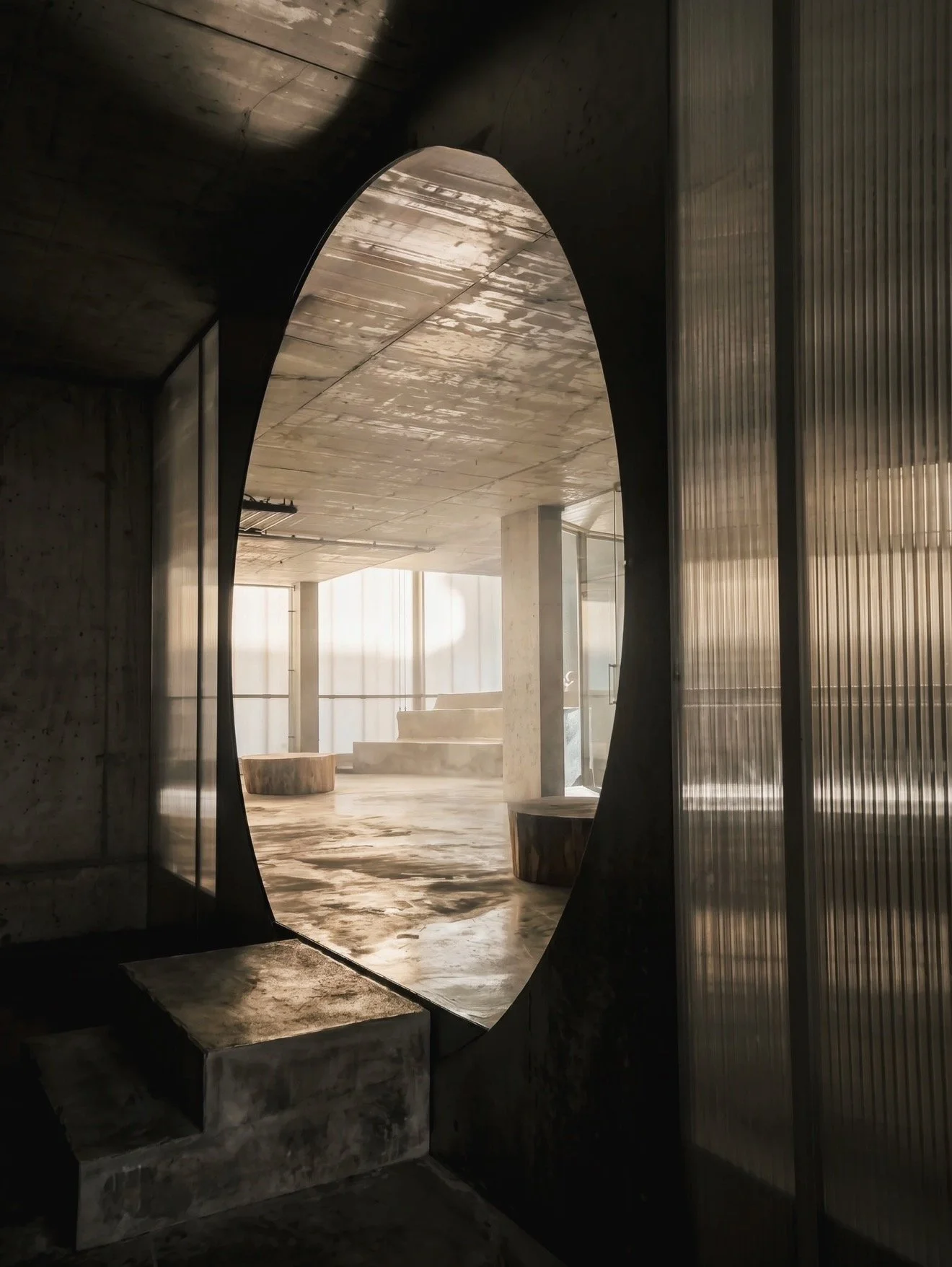
Brandlhuber’s four core materials, concrete, steel, glass and wood, set the direction. The building previously housed offices divided by lightweight partition walls. Removing these revealed its original character and opened up the possibility of a whole house to explore, just off Rosenthaler Platz.
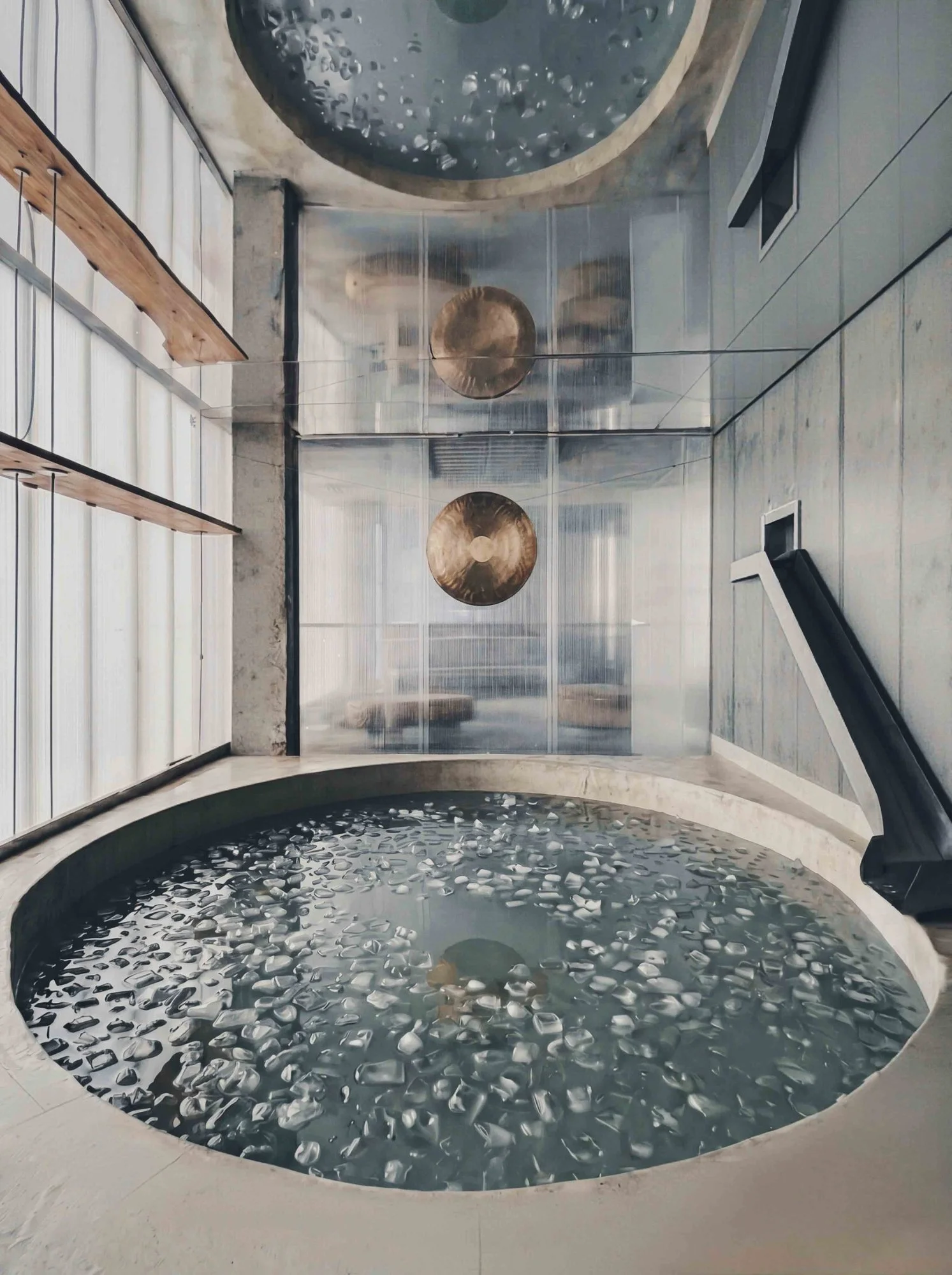
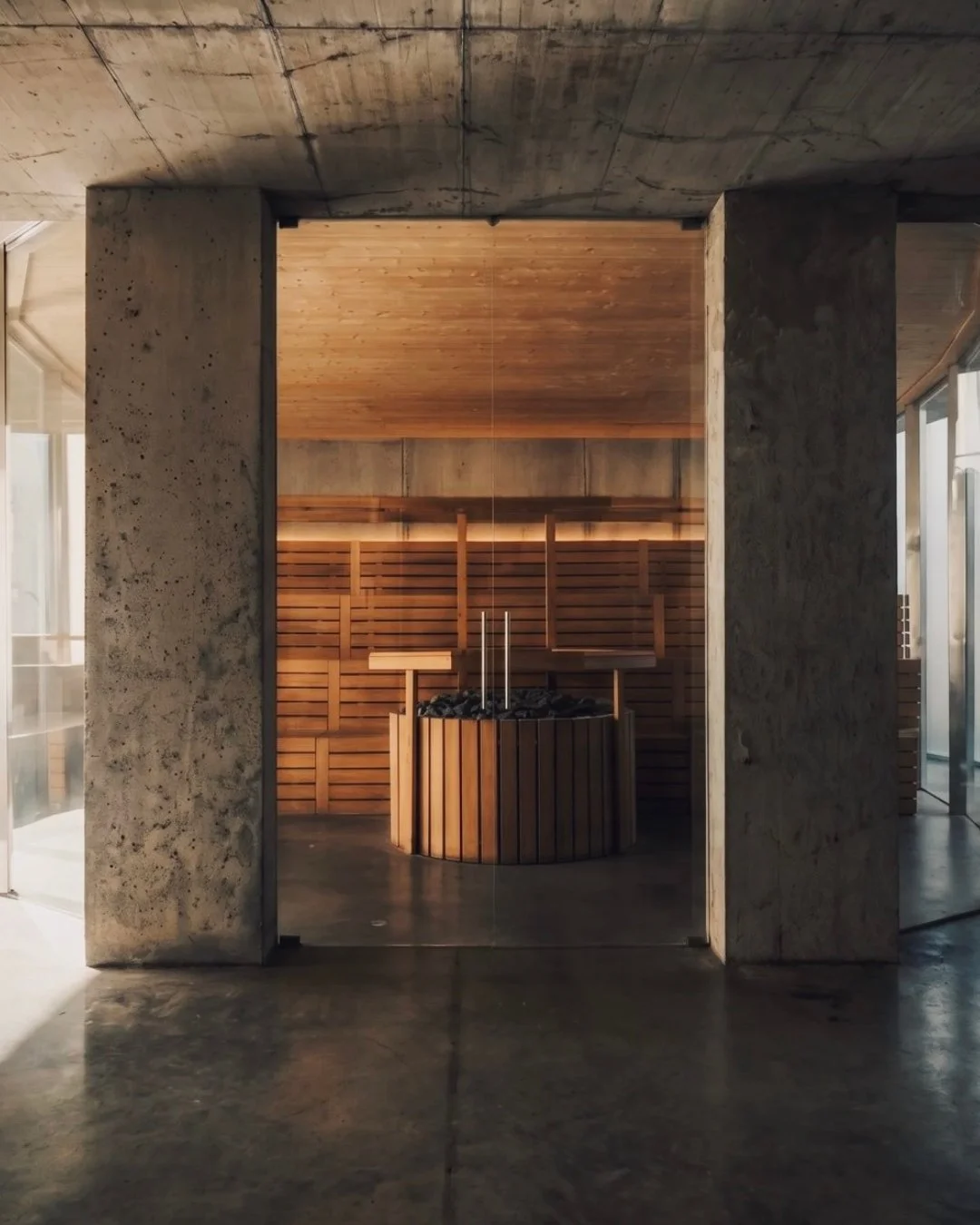
The house is dedicated to social wellness in three dimensions: movement, recovery and community. The red light movement studio and the new ANTIspa are complemented by a lounge, café, bar and concept store. Together, these spaces allow a visit to unfold beyond a class or spa session, with the rooftop adding an open-air setting in summer.
“The name sets out the resistance. The space gives the alternative a physical form. The antidote.”
Sartras developed the interior, the space design and the creative direction behind them. How did he approach the existing concrete shell, and what did he bring into it?
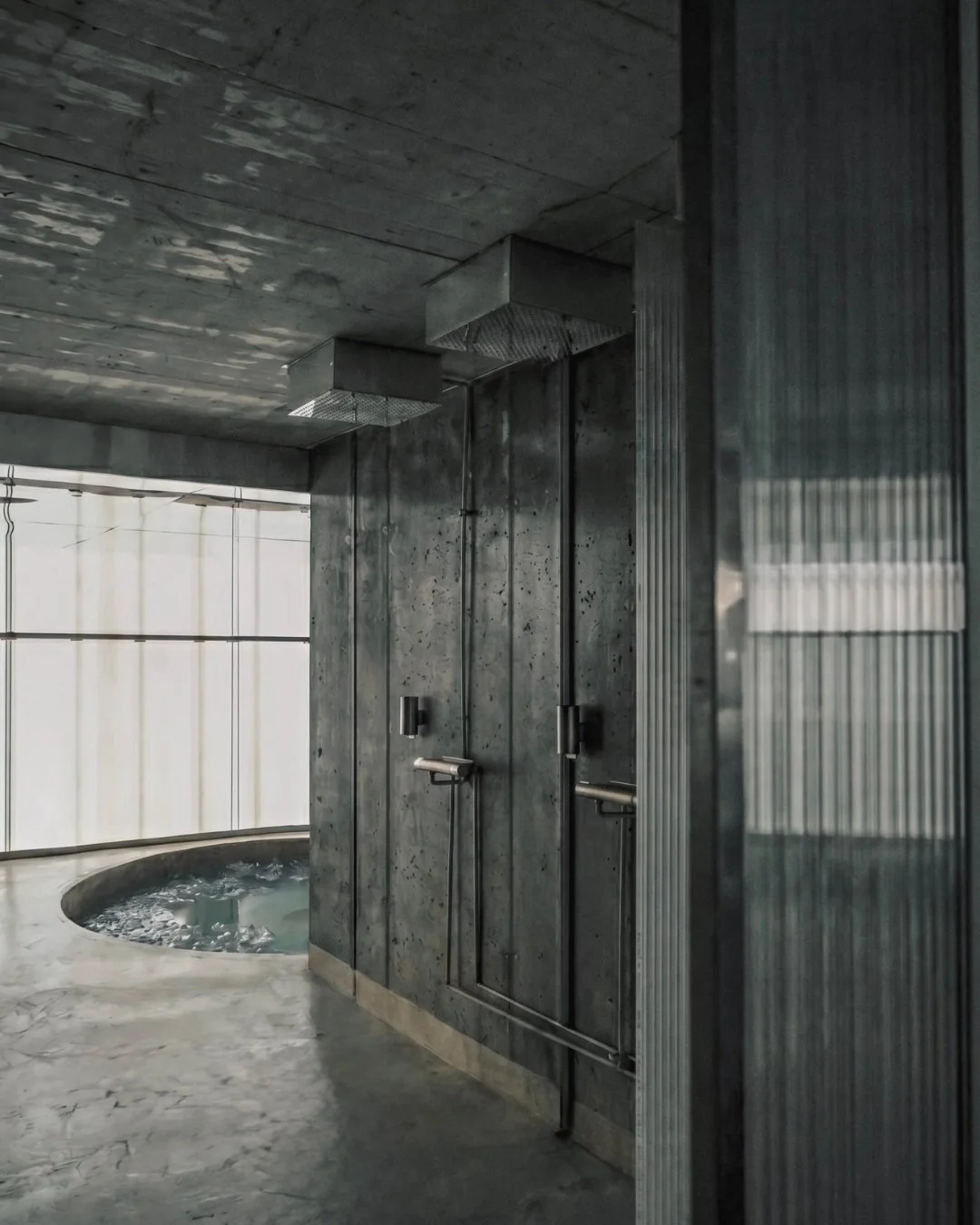
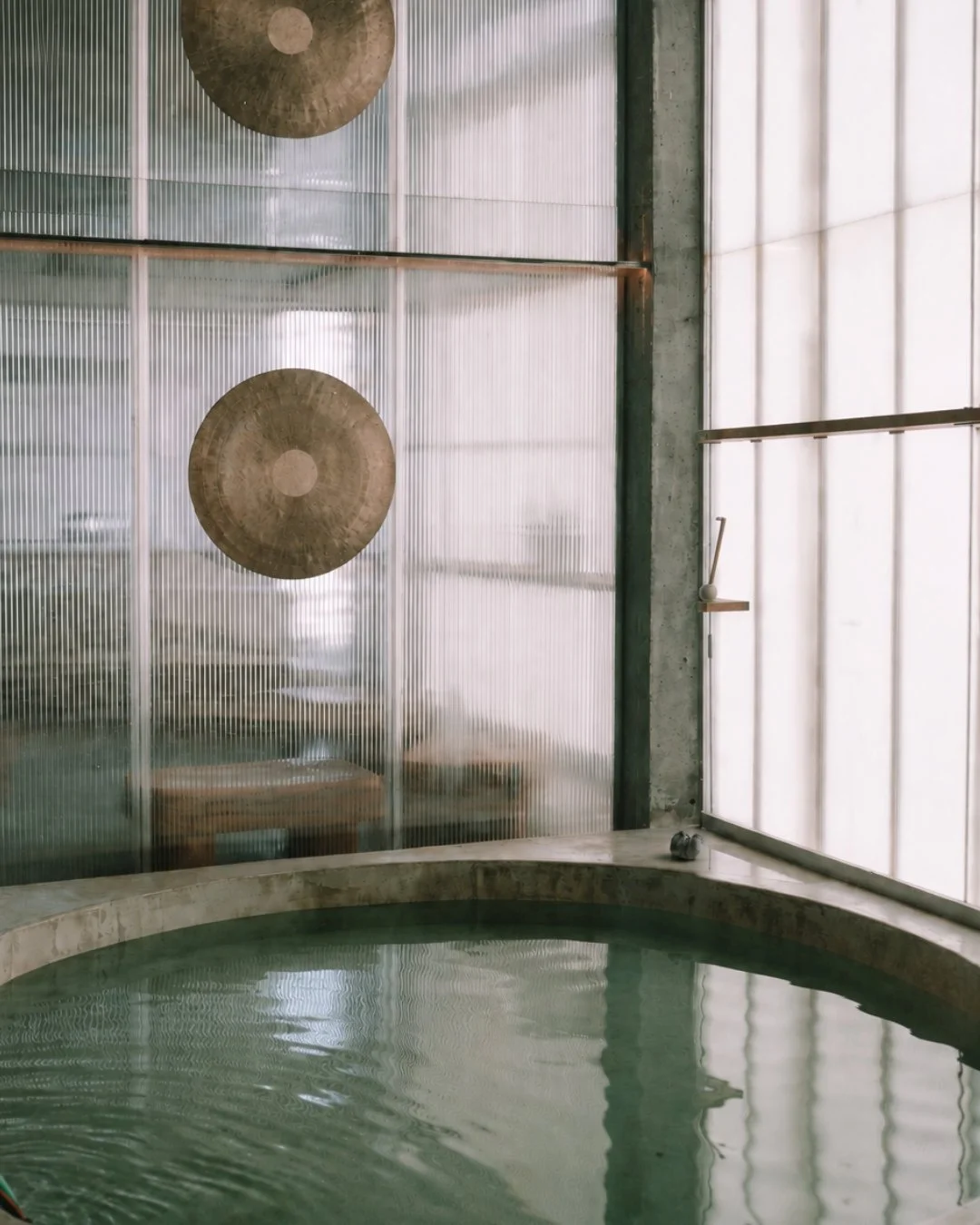
Sartras extended this architectural language with new walls, columns and sculptural structures, creating an organic flow throughout the space. Concrete became an honest expression of transformation: physical, sometimes rough, with countless shades of grey between black and white. The shell appears harsh and brutalist, yet its surfaces reveal an unexpected softness to the touch. That same warmth carries into the atmosphere of the house.
A session at ANTI moves between heat, cold, breath and rest. Beyond the physical effects, what is the appeal of these rituals?
They are old. Bathhouses, banyas, saunas: people have gathered around heat for centuries. At ANTIspa, that communal tradition becomes part of a contemporary city routine. The sequence of heat, cold, breath and rest gives a session its rhythm; returning each week, recognising faces and becoming familiar with the ritual gives it a place in everyday life.
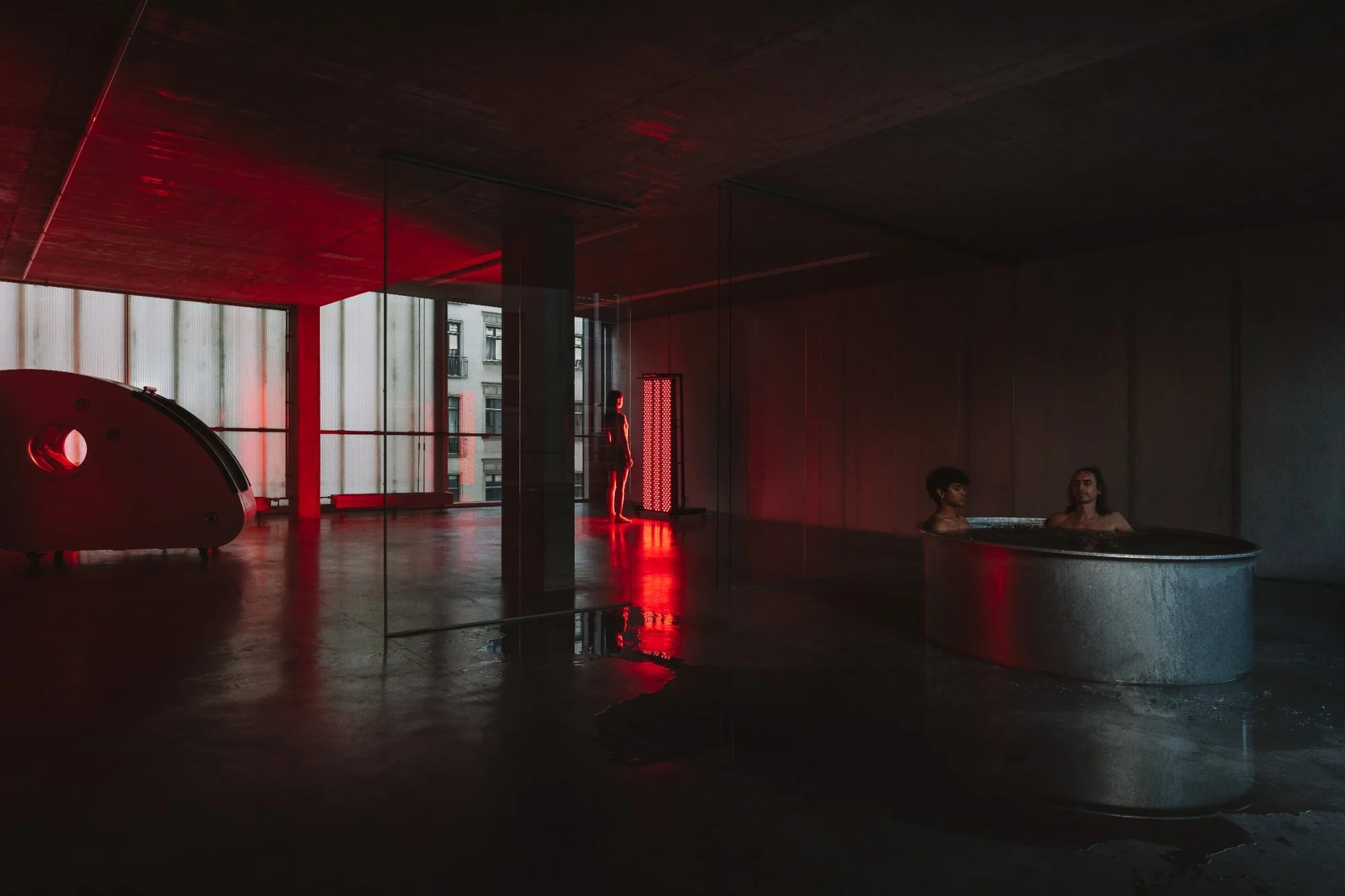
ANTI offers quiet solo sessions alongside group sessions with music. Why make recovery something people can share?
Sharing a sauna bench or taking a cold plunge together can make conversation feel surprisingly easy. There is little ceremony to it: people experience the same intensity, pause together and gradually become more comfortable around one another. The group sessions make room for that exchange, while quiet solo sessions leave space for those who want time to themselves.
Berlin has long been defined by its nightlife. Could music-filled nights at ANTI change how people in the city spend time together?
Berlin taught the world how to spend a night together. At ANTI, the substance changes: heat, ice and a room moving to the same track. In a city where so much social life revolves around alcohol and drugs, the community’s desire for other ways to connect pushed the founders to go further. Listening salons, sauna raves and evenings spent simply hanging out bring that social energy into a different setting, with a shared high that comes from the experience itself.
“Berlin taught the world how to spend a night together. At ANTI, the substance changes: heat, ice and a room moving to the same track.”
How has ANTI evolved since it opened, and what matters most as it develops?
ANTI grew from a community into Germany’s first red light movement studio, with a spa following a year later. What began around movement could now stretch into whole afternoons and evenings: a class, a sauna session, time to stay and talk.
The community also extends beyond the house, with runs, outdoor gatherings and activations elsewhere. ANTI is both a space and the people who come together through it. As the possibilities grow, keeping that relationship close remains central: the community continues to shape what happens next.
Finally, what does a restorative day in Berlin look like for Sartras and Benecke, away from ANTI?
Away from ANTI, Sartras and Benecke spend much of their downtime in the forest with their dog, running, swimming in the lake or simply lying in the grass. Nature is a constant in their lives, a retreat from the pace and intensity of Berlin.
Discover more places like these in the VISUALPLEASURE Berlin City Guide. Over 100 curated venues with a custom Google Map.