THE EDIT: Cafés and Bakeries in Berlin Worth Visiting for the Interior
THE EDIT:
Cafés and Bakeries in Berlin Worth Visiting for the Interior
Blue concrete, stainless steel, chestnut, red vinyl and rose marble. Five rooms in Berlin where the material sets the room.
STROM
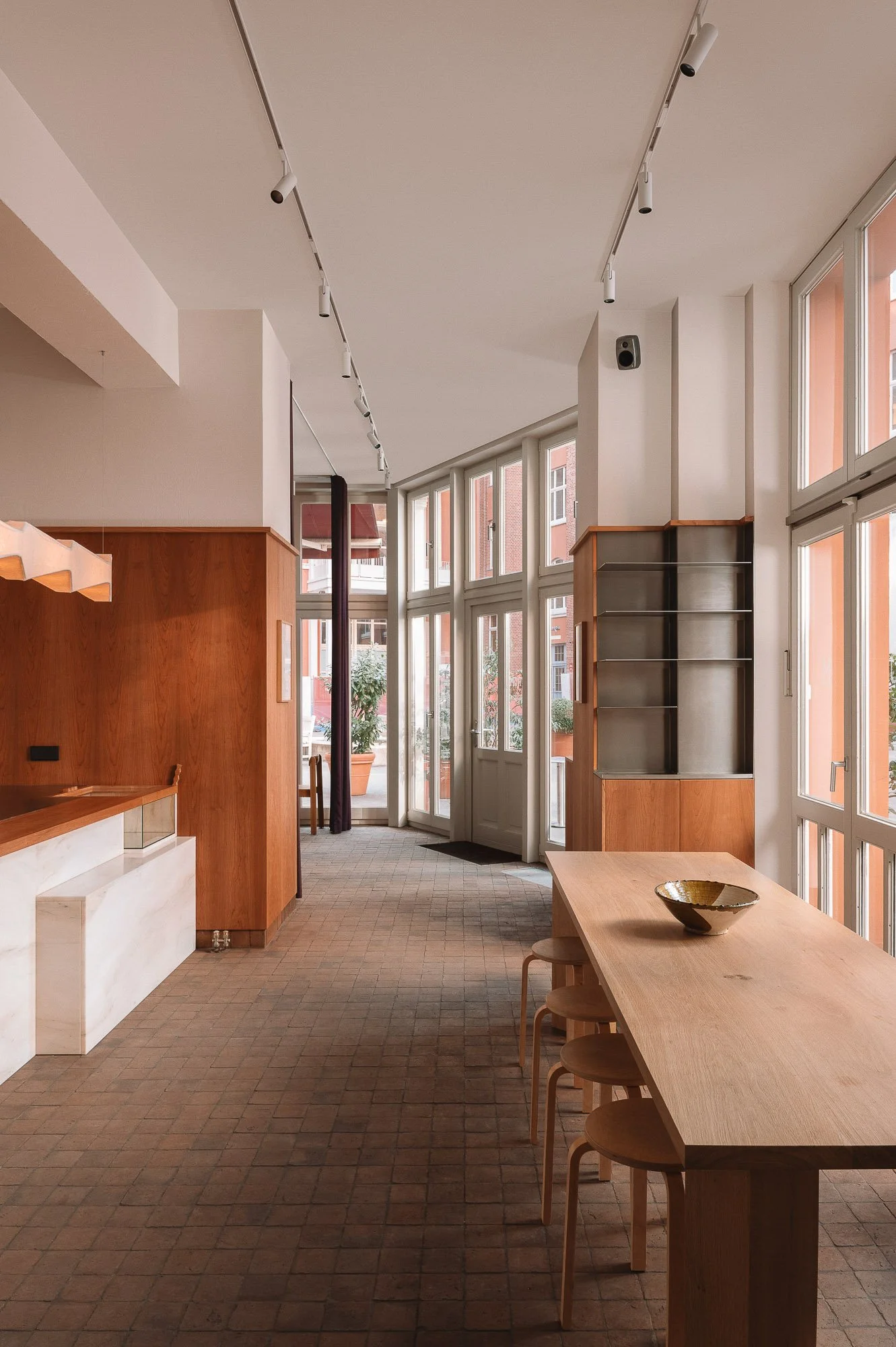
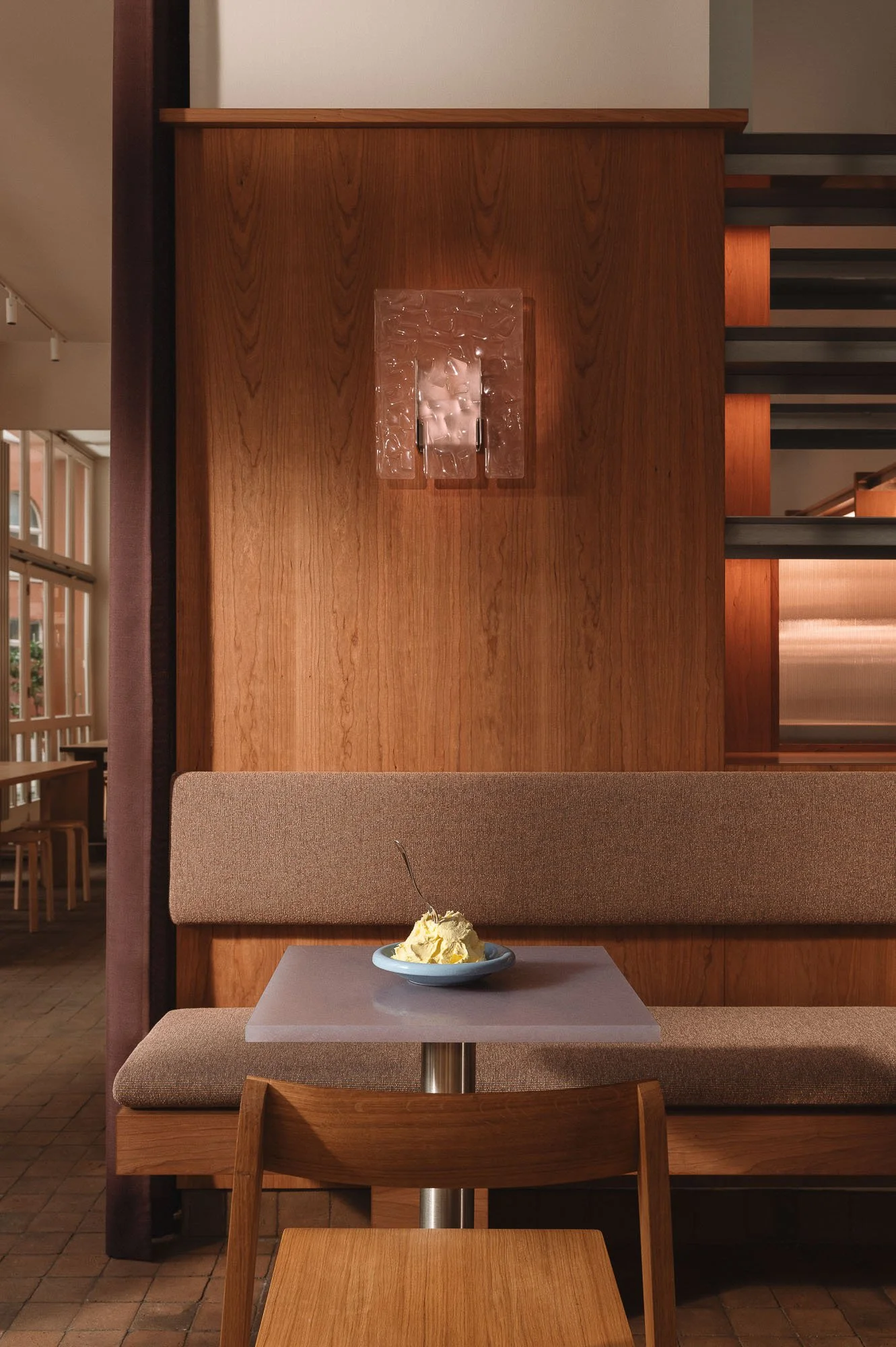
Opened in late 2025 and designed by Celeste Asfour, a seasonal courtyard café tucked within a historic industrial complex from 1911, where the space unfolds between interior and courtyard. The material palette is rooted in craftsmanship and heritage techniques. Wood-fired terracotta tiles and hand-produced Murano glass lamps form the backbone of the interior, complemented by steel detailing and recycled resin surfaces. Warm cherry wood and a sculptural brutalist rose-marble bar unify the contrasts, balancing tradition and modernity with restraint.
Photography by Clemens Poloczek
SOFI
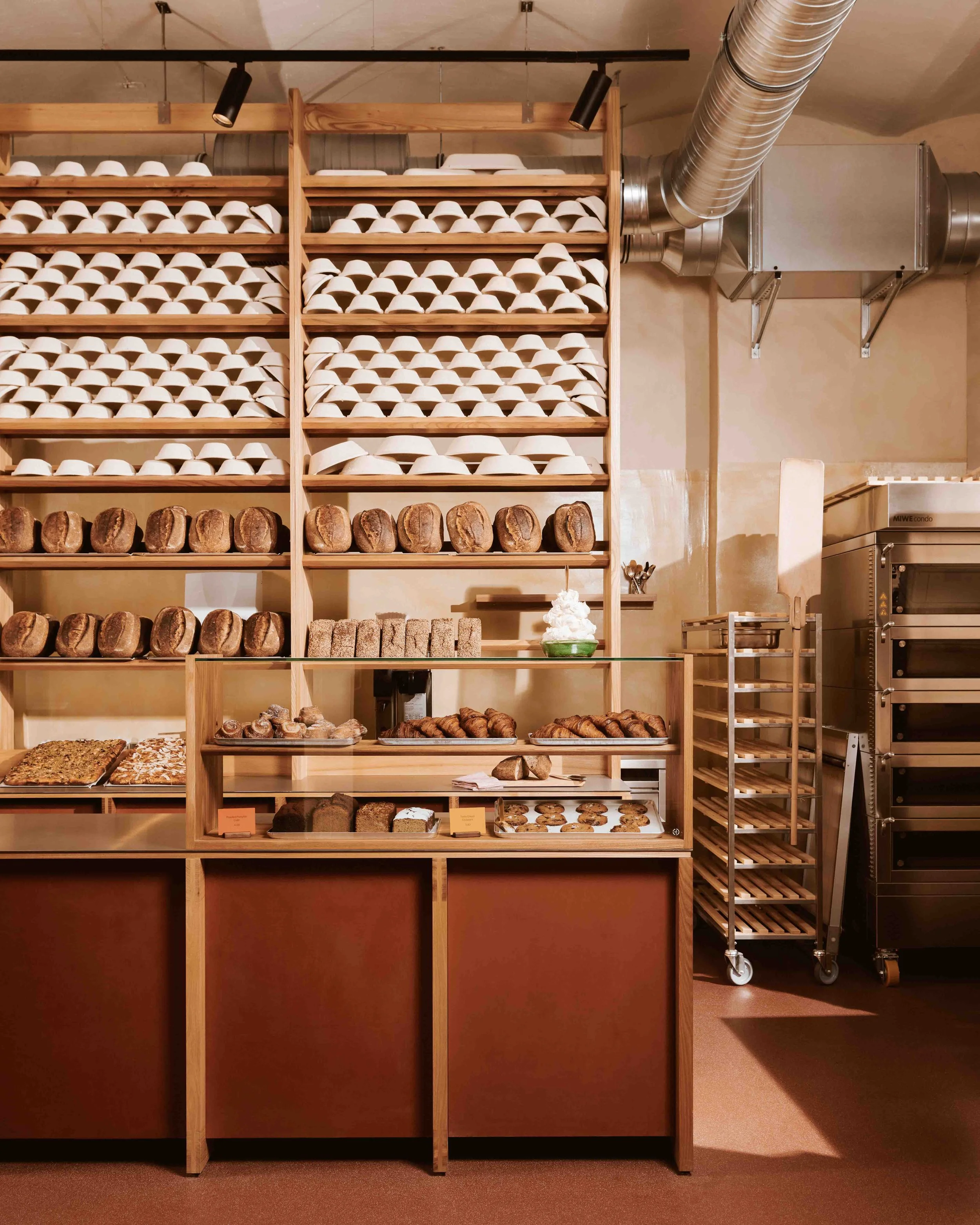
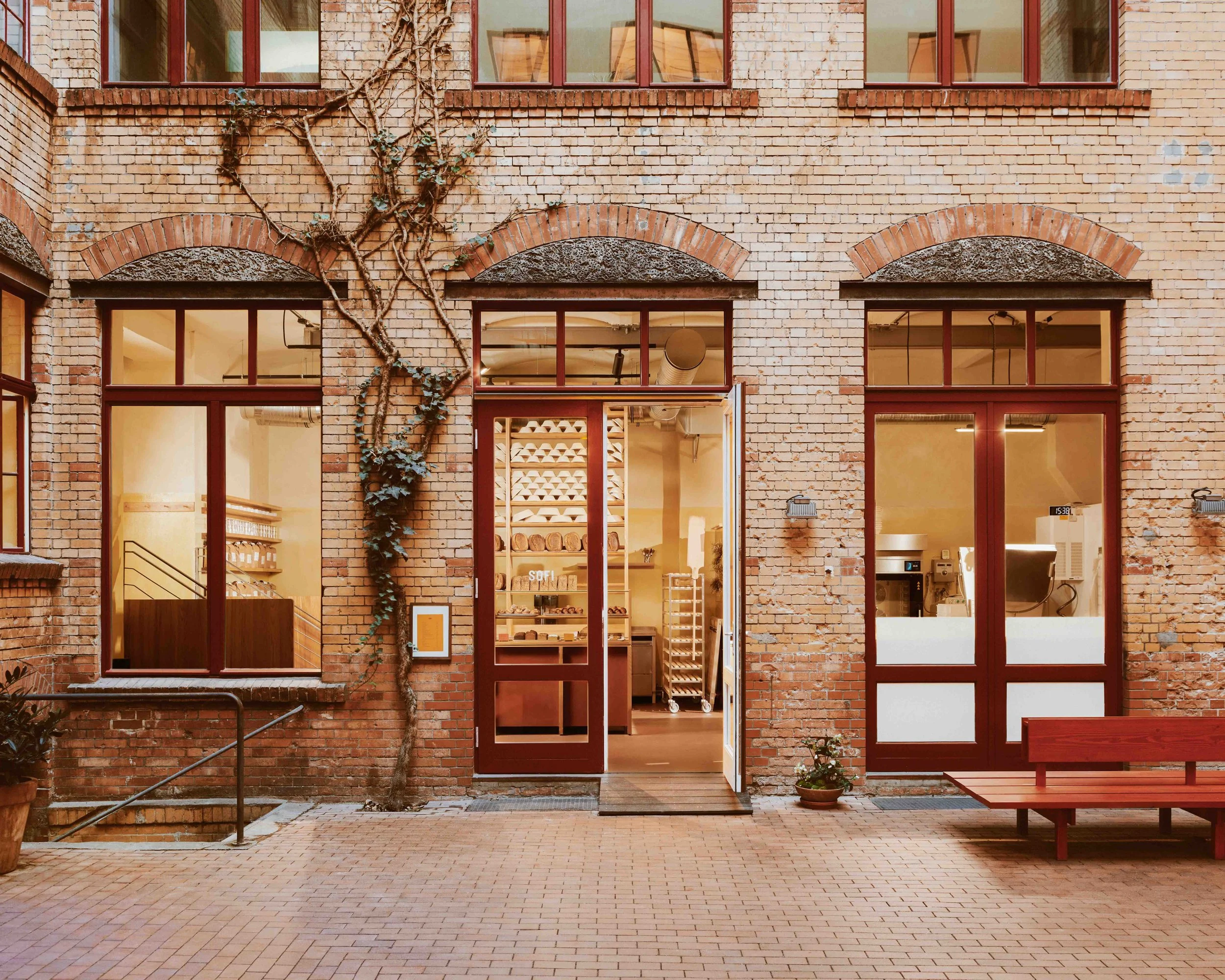
Inside a restored 19th-century brick factory building, the bakery is rooted in low-intervention craft baking and works with ancient grains sourced from small organic farmers in Northern Europe. An open-plan kitchen at the centre allows guests to watch the process unfold. A long communal table runs through the room, and a tall open shelving unit separates the bakery from the guest area, holding ceramics, coffee, tea, natural wines and flour from the Danish Kørnby mill. Double-height ceilings, solid elm furnishings, a red vinyl floor and soft yellow walls are shaped by a palette inspired by dough. The interior is by Danish architects Mathias Mentze and Alexander Vedel Ottenstein.
Photography by Fanette Guilloud
ACID P-BERG
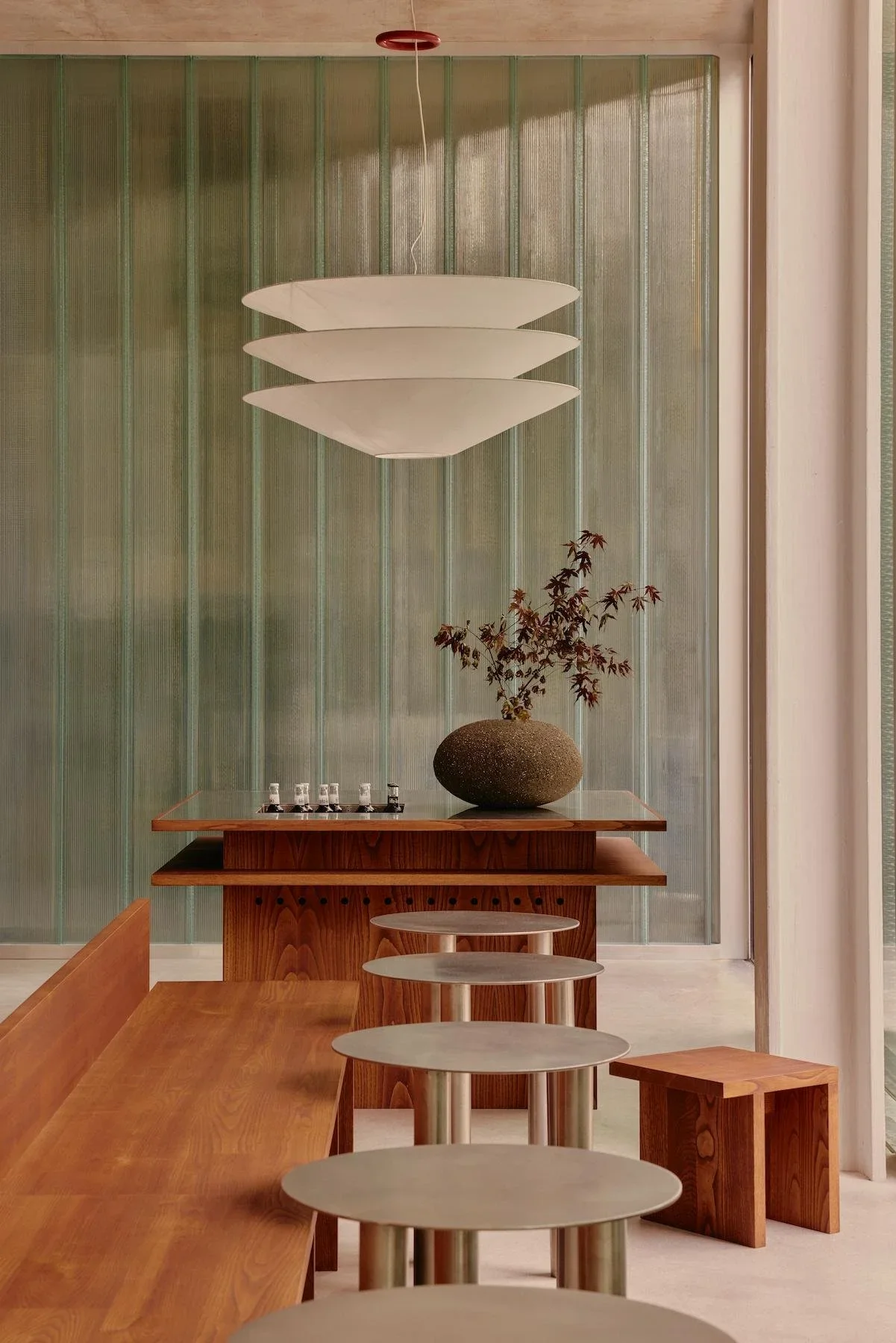
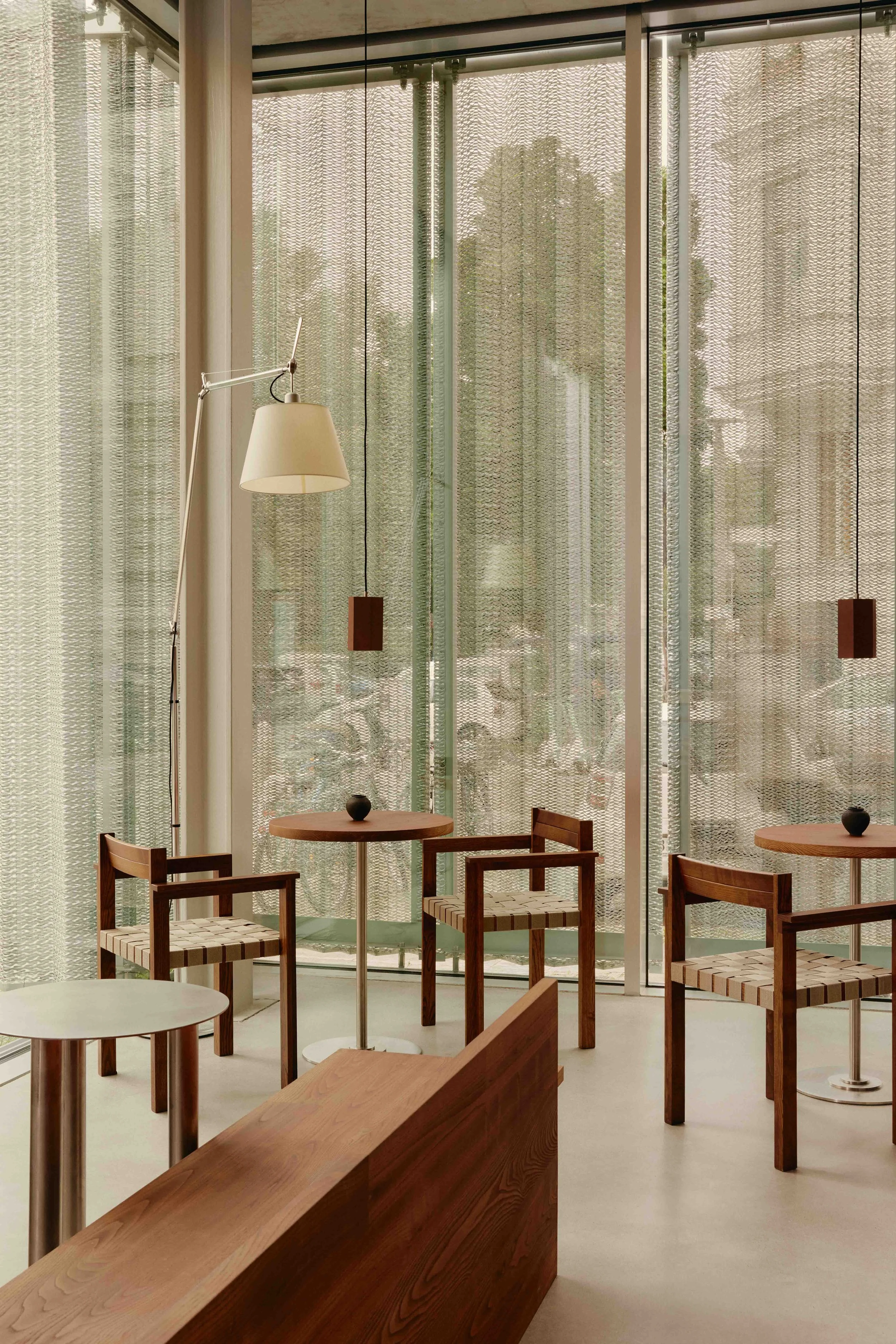
Spanish architecture firm Plantea Estudio transforms an existing concrete shell into the second Berlin location for ACID, founded in Madrid in 2017 and open in Prenzlauer Berg since May 2025. The approach was to hold on to the raw elements already in the room and introduce warmth against them. Chestnut wood is placed against granite and stainless steel, with a three-tier paper lamp by Ingo Maurer and ceramic pendants by Wendy Taylor bringing light into the space. FRAMA chairs, shelving and tables sit throughout. Sound is treated as part of the design, with custom shelving built to hold the speakers. The result is an interior that reads closer to a home than a bakery.
Photography by Daniel Farò
AERA BREAD
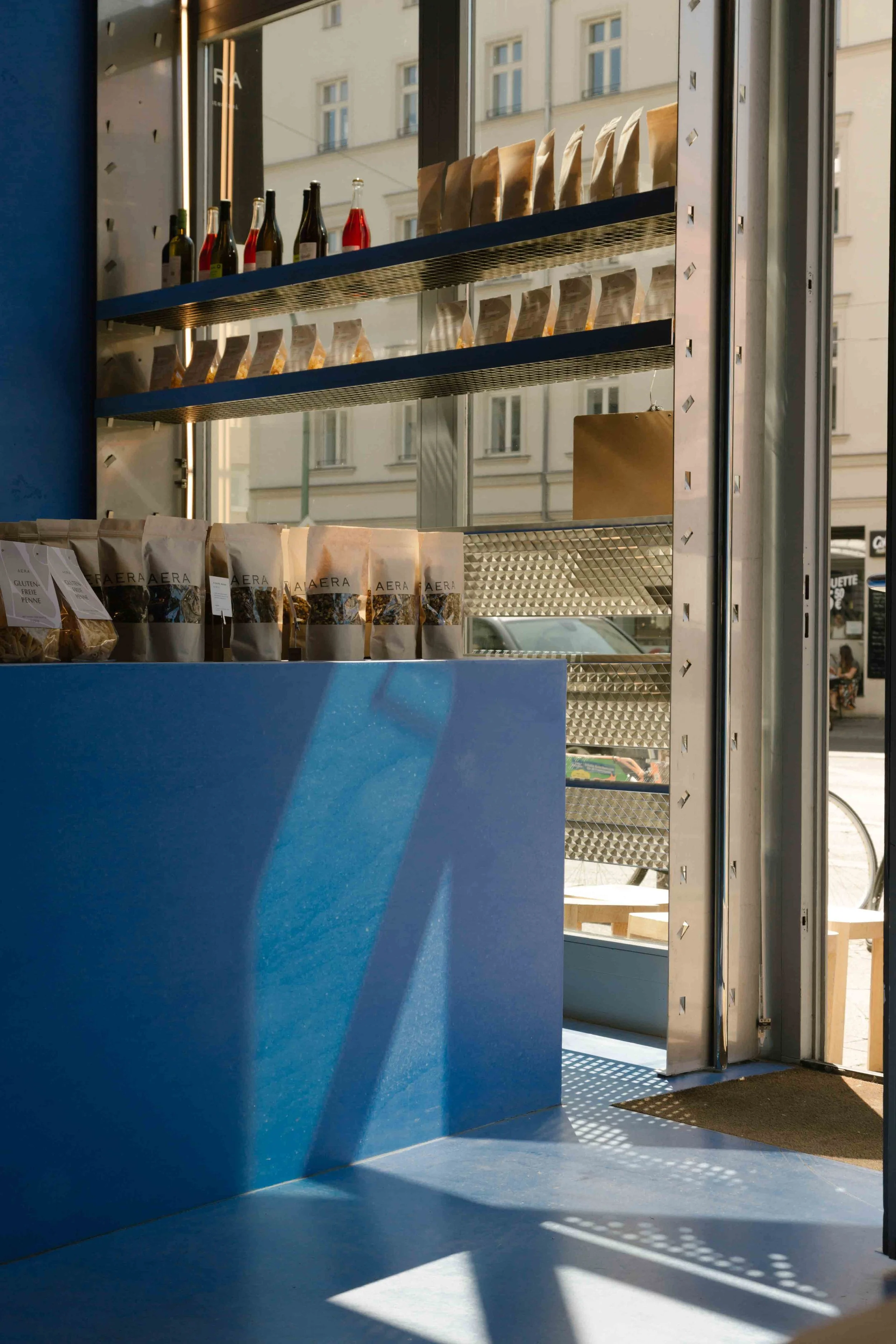
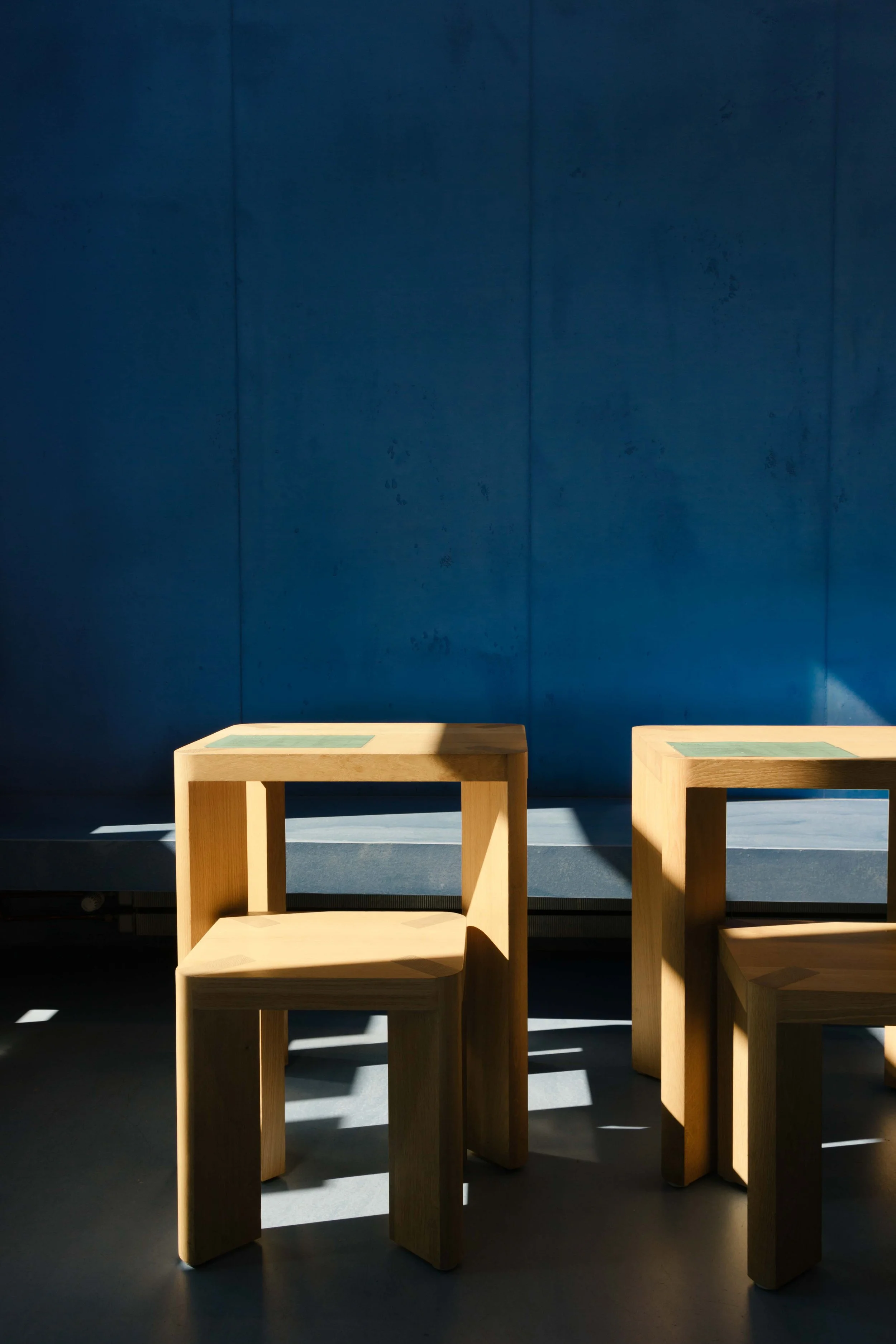
At Rosenthaler Platz, a bakery rethinking what gluten-free baking can be, with an interior by Gonzalez Haase. A large storefront window opens the full depth of the space to the street, where a Lapis Lazuli blue interior and solid oak furniture fill the room. The breads and baked goods serve a broad community, from everyday regulars to athletes and health-conscious eaters. A second location in Charlottenburg was designed by Modiste Studio.
Photography by Corinna Hopmann
OPEN HOUSE
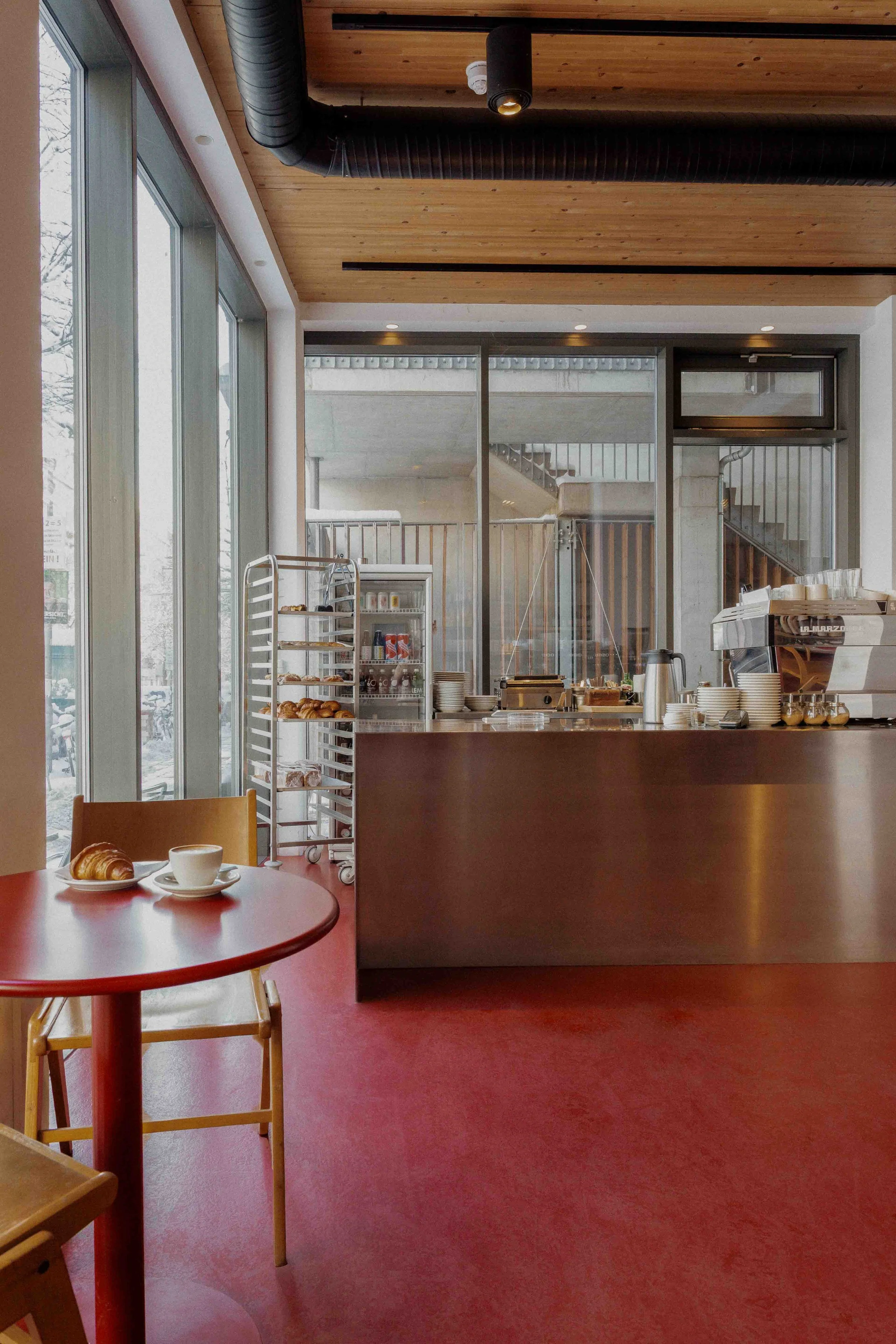
A neighbourhood café in the Winskiez designed by Lisa Cipriano and Daniela Treija, shaped by honesty and restraint. Contrast carries the spatial concept: a long steel counter set against the warmth of a semi-matte oxblood-red floor. The pigment, Ochsenblut (oxblood), is long associated with Berlin apartment buildings, chosen originally for its practicality and cost and now tied to the identity of the city. Stainless steel shelving doubles as retail space, stocked with natural wines. Fresh sourdough is baked daily and served as toast with seasonal toppings, alongside Australian-style pies and coffee by Berlin roaster Sincerely Coffee. On weekend nights it becomes Bottle Shop, its natural wine extension.
Photography by Hürriyet Bulan
All five cafés in this Edit are in the Guide by VISUALPLEASURE: Berlin, our first city guide.

GET THE GUIDE
Over 100 places. 11 neighbourhoods.
Custom Google Map.
Built for your phone, designed like a coffee table book.